Your DSPM found the sensitive data. imPAC enforces what protects it.
Classification tells you an S3 bucket holds regulated data. It does not tell you whether the encryption, key rotation, backup, and public access settings around that bucket are correct today, or whether they were correct last quarter. imPAC ingests classification tags and turns them into enforced configuration policy, with the history to prove it held.
Built for security architects, data governance leads, and teams operationalising a DSPM investment.
- 3 partners
- Cyera, Varonis, and BigID integrations live today
- 5 minutes
- to stand up a data-scoped policy, one engineer
- No code
- policies built without engineering tickets
- Continuous
- controls re-evaluated as configuration changes
Live integrations with the DSPM you already run
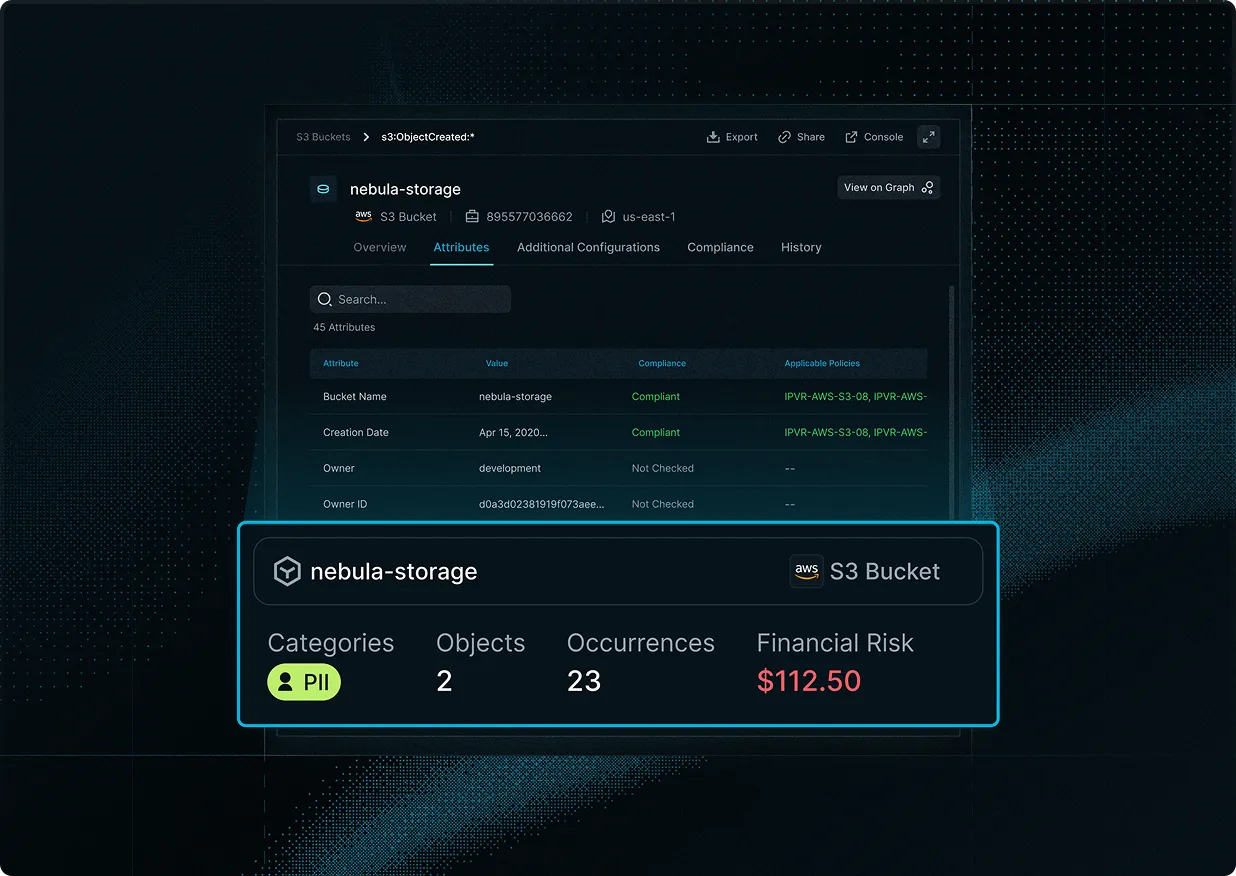
Classification tags map onto the imPAC asset inventory, so the asset your DSPM classified and the asset imPAC evaluates are the same object.
Classification is not protection.
Most organisations that bought a DSPM now have an accurate map of where sensitive data lives, and no automated way to act on it. The tags sit in one tool. The configuration that actually protects those assets sits in another. Translating between them is manual, it is nobody's full time job, and it decays the moment the environment changes.
Months of tagging work with no enforcement attached
A classification programme is a real investment, and the output is a map. The map does not encrypt anything, does not rotate a key, and does not close public access. Teams translate findings into configuration changes by hand, asset by asset, and the translation is never finished because the environment keeps moving.
Encrypted is not the same as protected
Knowing a bucket holding PII is encrypted answers one question out of five. Whether the key rotates, whether backups exist, whether replication respects residency requirements, and whether public access is blocked are separate settings that fail independently. Checking one and assuming the rest is how exposure survives a passing audit.
One control passing does not mean the chain holds.
You cannot show that protection held over time
When an executive or a regulator asks whether PII was protected, the honest answer from a posture tool is that it is protected right now. That is not the question. The question covers a period, and answering it requires the prior states, which most stacks never retained.
“Was our PII protected in Q1?”
Protected, except Feb 12 – Feb 22, when key rotation lapsed on two accounts. Dated, evidenced, exportable.
From classification tag to proven control in four steps
Ingest the tags, scope the policy to what matters, enforce the whole configuration chain, then keep the proof.
Connect Cyera, Varonis, or BigID and classification tags map automatically onto the imPAC asset inventory. The asset your DSPM classified and the asset whose configuration imPAC evaluates become the same object, which is the join that makes everything downstream possible.
Write policy that applies to storage holding regulated data rather than to all storage. Scope by classification, volume, jurisdiction, or business criticality, so a rule can target storage accounts holding more than 100,000 PII records specifically. The policy is built in no-code, so the person who understands the data requirement writes it without a ticket to engineering.
Define what protection means as a set: encryption type, key rotation interval, backup and retention, replication and residency rules, public access blocking. One policy covers the chain across clouds. When an asset falls out, remediation steps are generated and the fix is validated rather than assumed.
Every control state is retained by date, so the question of whether regulated data was protected during a given period has a real answer with evidence behind it. Severity also adjusts continuously with sensitivity, so an exposure on classified data escalates automatically rather than waiting in the queue.
One policy, scoped to what the asset holds
Classification tags become the scope. The control chain around every matching asset is enforced and re-evaluated as configuration changes.
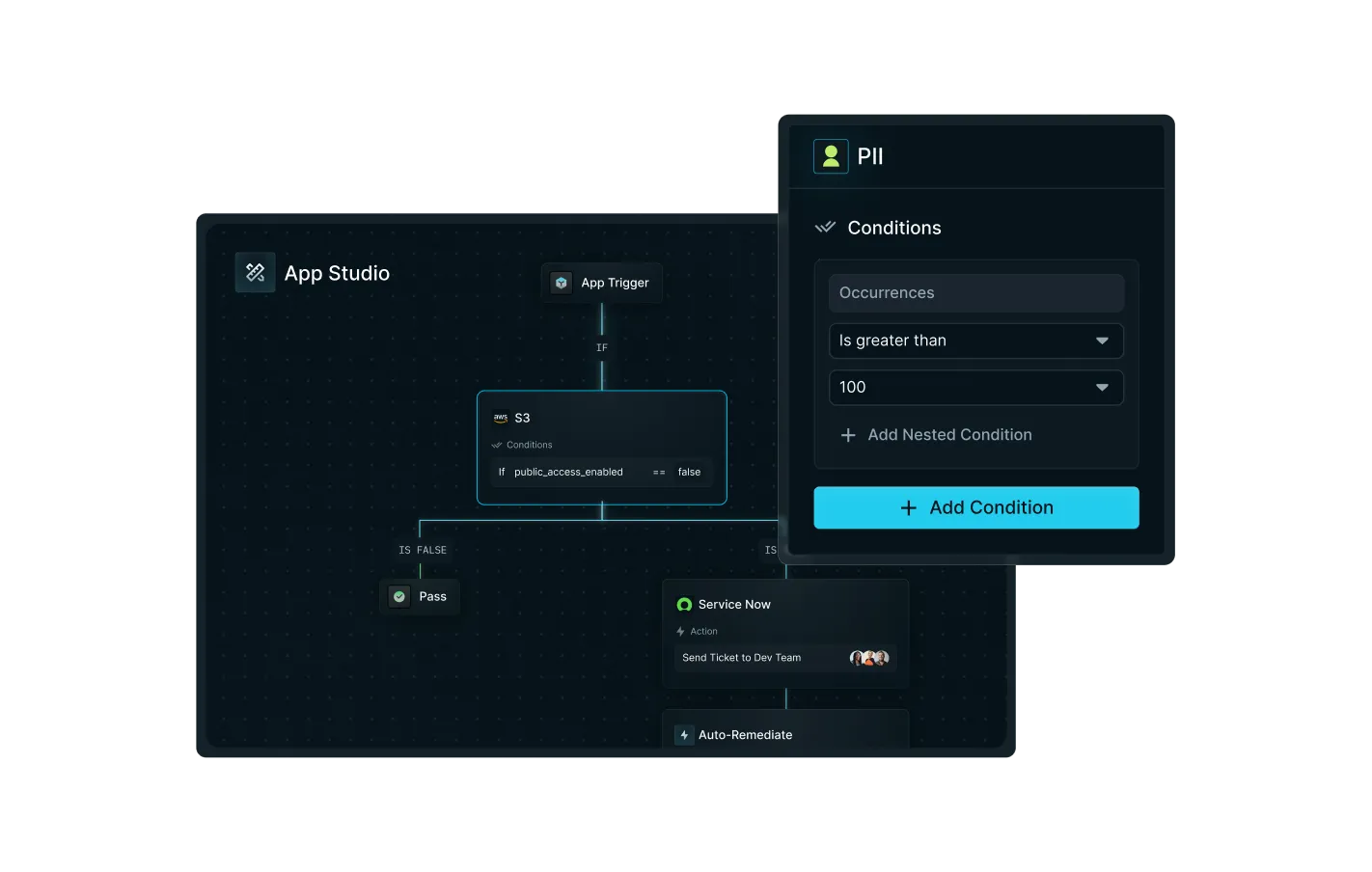
The control chain imPAC enforces around classified data
Protection is a set of settings that fail independently. imPAC treats them as one requirement.
imPAC does not discover or classify data. Your DSPM does that, and does it well. imPAC takes the classification and enforces and proves the cloud configuration protecting it. The two halves are complementary, which is why these are partnerships rather than overlaps. Sensitivity-weighted severity is the same capability described on Cut Alert Noise, seen from the data side.
“We had spent the better part of a year classifying data and the output was a map nobody could act on at scale. imPAC turned the tags into policy. Now an asset holding regulated data is either configured correctly or it is a finding, and I can show which it was on any date.”
-CISO, Financial Services
What enforced data controls mean for your team
Your DSPM starts acting
Months of classification work become enforced policy instead of a map somebody reads.
The whole chain, not one setting
Encryption, rotation, backup, residency, and exposure enforced as one requirement.
Written by the person who knows
No-code policy means the data governance lead writes the rule without an engineering ticket.
Sensitivity-aware alerting
Findings on classified assets escalate automatically. Findings on empty assets do not.
Real answers for executives
Show time-stamped evidence when someone asks whether PII was protected last quarter.
Consistent across clouds
One policy applies the same data requirement across AWS, Azure, and GCP.
Frequently Asked Questions
Does imPAC classify data?
Which DSPM platforms are supported?
What if our data classification is done in house?
How is this different from what our CSPM already does?
What happens when an asset falls out of compliance?

Connect your DSPM and see the gap
We will map your classification tags against the actual configuration protecting those assets and show you where the chain is incomplete. Most teams find something in the first session.